
CELEBRITY
💥 “YOU CAN’T LITIGATE A LIE INTO TRUTH”: MELANIA TRUMP FIRES BACK AS MICHAEL WOLFF’S LAWSUIT HITS A WALL OF RECORDS Melania Trump didn’t evade Michael Wolff’s lawsuit. She confronted it — and dared it to stand up to evidence. Before a packed press room, cameras locked on her every move, Melania addressed Wolff’s central claim without hesitation. “Michael Wolff believes this case will expose what I knew about Donald Trump and our private decisions,” she said evenly. “But lawsuits don’t create facts. Depositions don’t invent truth. Documents do.” The air in the room tightened. She reminded reporters that Donald Trump has already endured relentless scrutiny. “My husband has been investigated, interrogated, and examined more than any modern president” Melania said. “If proof existed to support Wolff’s narrative, there would be no reliance on anonymous sources, recycled speculation, or theatrical legal pressure.” Her message sharpened. “This case survives on implication and repetition,” she warned. “But when timelines are aligned and sworn records are placed side by side, the narrative collapses.” Then came the line that reframed the entire lawsuit. “This action will not uncover hidden truths,” Melania said. “It will expose the danger of turning conjecture into litigation — and mistaking volume for evidence.” She stepped away without taking questions. No rebuttals followed. No clarifications offered. And as the room emptied, one thing was unmistakable: this wasn’t a defense — it was a challenge. Full story in the comments 👇

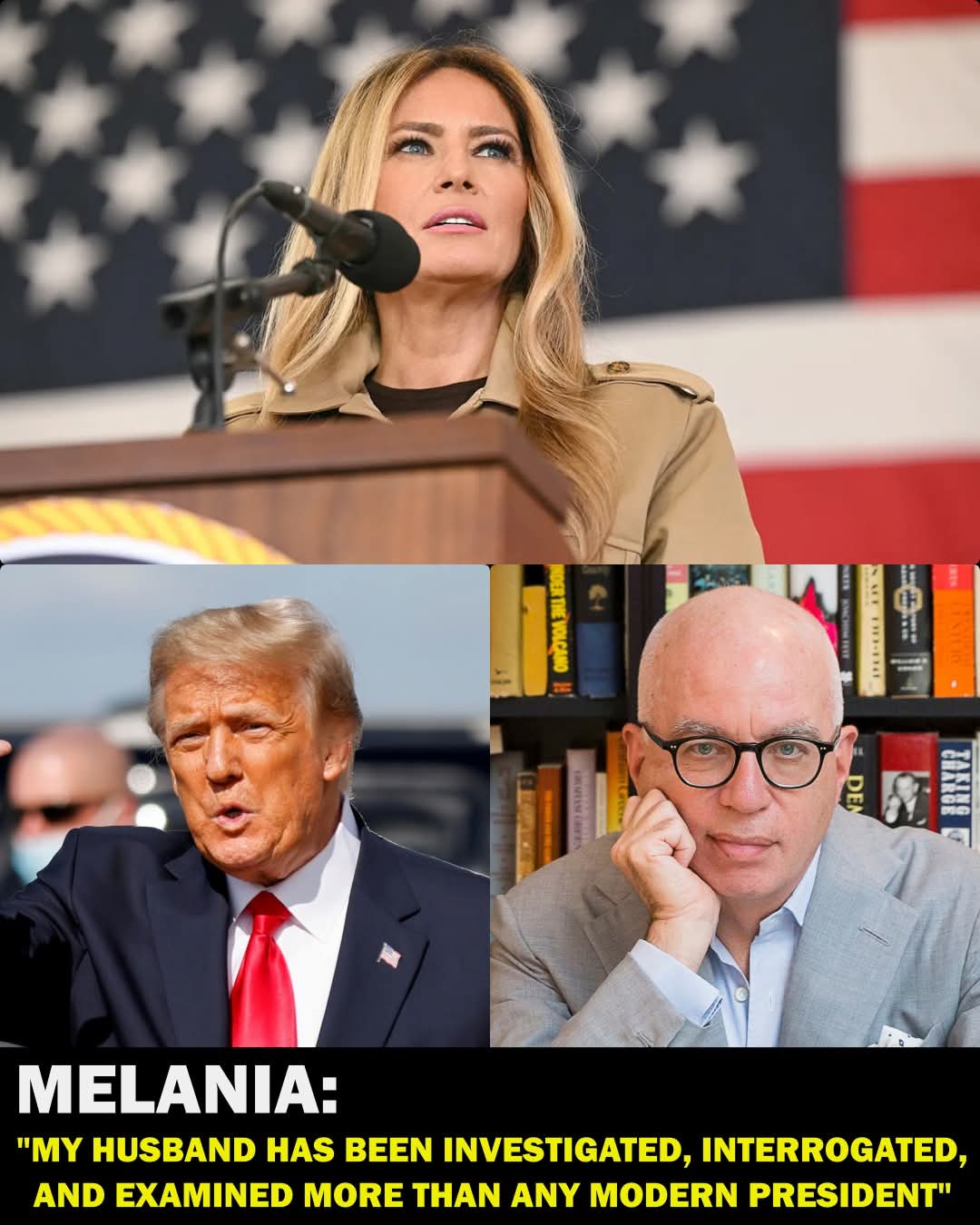
“You Can’t Litigate a Lie Into Truth”: Melania Trump Pushes Back as Michael Wolff’s Lawsuit Meets a Wall of Records
In a rare and measured public appearance, Melania Trump stepped into a packed press room and delivered a response that was as deliberate as it was defiant. Rather than sidestepping the lawsuit brought by author Michael Wolff, the former First Lady confronted it head-on framing the legal battle not as a clash of personalities, but as a test of evidence versus insinuation.
With cameras trained on her and reporters crowding the aisles, Melania addressed the lawsuit’s core premise without hesitation. Wolff, she noted, claims the case will reveal what she knew about her husband, Donald Trump, and the private decisions made within their marriage. Her reply was calm, clipped, and unmistakably pointed.
“Lawsuits don’t create facts,” she said evenly. “Depositions don’t invent truth. Documents do.”
The room fell quiet.
Melania’s remarks marked a notable departure from her usual public reserve. Instead of relying on surrogates or legal filings alone, she chose to speak directly


placing the burden of proof squarely back on her accuser. The thrust of her argument was simple: if the claims at the heart of Wolff’s narrative were supported by verifiable evidence, they would not depend on anonymous sources, recycled speculation, or what she characterized as “theatrical legal pressure.”
She reminded the audience of the extraordinary level of scrutiny her husband has faced over the years. “My husband has been investigated, interrogated, and examined more than any modern president,” Melania said. “If proof existed to support Wolff’s narrative, it would already be known.”
Her critique sharpened as she went on, warning that repetition and implication no matter how loudly amplified do not amount to truth. According to Melania, the lawsuit survives on suggestion rather than substance, and on the hope that insinuation might harden into accepted fact.
“This case survives on implication and repetition,” she said. “But when timelines are aligned and sworn records are placed side by side, the narrative collapses.”
It was the closing line, however, that reframed the entire dispute and left a lasting impression on those in the room.
“This action will not uncover hidden truths,” Melania concluded. “It will expose the danger of turning conjecture into litigation and mistaking volume for evidence.”
With that, she stepped away from the podium. No questions were taken. No follow-up statements were issued. Her legal team declined to elaborate, signaling that their confidence rested not in rhetoric, but in the documentary record they expect to present.
The response or lack of one was telling. No immediate rebuttals followed from Wolff’s camp. No clarifications were offered to counter her claims about timelines, sworn records, or the absence of hard proof. As reporters filtered out of the room, the prevailing sense was that Melania Trump had not mounted a traditional defense. Instead, she had issued a challenge.
For supporters, her remarks underscored a long-standing argument: that sensational narratives can thrive in the absence of evidence, especially when they align with preconceived assumptions. For critics, the moment raised a different question whether the courtroom will ultimately validate her confidence or vindicate Wolff’s claims.
Either way, the lines are now clearly drawn. Melania Trump has placed her bet on documents, records, and sworn testimony, daring the lawsuit to withstand their weight. As the case moves forward, the central question remains the one she posed so starkly: can allegation alone survive when confronted by the record?

Just In: 2 Mins Ago! Sign from GOD? Biggest Tragedy JUST Happened in The USA! The World is Shocked and Scared 👉 Read the full story here:

Pete Hegseth said “family after family” of service members killed urged the administration to “not stop until the job is done.” One of the people he met at Dover Air Force Base in Delaware was Charles Simmons. His 28-year-old son, Tech. Sgt. Tyler H. Simmons, was among the six crew members killed when their refueling plane crashed in Iraq last week. Simmons recalled his exchange differently. “I can’t speak for the other families. When he spoke to me, that was not something we talked about,” he told NBC News. Asked if he said anything to Hegseth or Trump about the need to keep fighting the war, Simmons said, “No, I didn’t say anything along those lines.” A 60-year-old music teacher in Columbus, Ohio, Simmons told NBC News that he has “questions” about the war and isn’t able to draw “definitive conclusions when I don’t have all the data.” Read more

BREAKING: TRUMP’S DOOM SEALED: FEDERAL COURT ORDERS HIM TO TESTIFY UNDER OATH IN 72 HOURS – WHITE HOUSE IN FRANTIC MELTDOWN AS SECRETS ABOUT TO EXPLODE ON LIVE TV! 😱💥 Read More

🚨 BREAKING: White House FUMES After Tom Hanks’ Brutal Oscars Joke About Melania Last night’s Oscars were mostly calm — until Tom Hanks stepped on stage. While presenting a category, Hanks delivered a series of sharp jokes… and one of them directly targeted Melania T.r.u.m.p’s widely mocked documentary. “Oh man,” he joked, “someone’s going to be mad his wife wasn’t nominated for this.” The audience laughed. But Hanks didn’t stop there. Moments later he took another swipe — this time about free speech and world leaders who don’t like criticism, dropping a punchline that instantly set the room buzzing. Then came one final line about “documentaries where you just walk around the White House trying on shoes.” The theater erupted. The internet exploded. The White House? Not amused. Within hours, T.r.u.m.p’s communications director fired back online with a furious message aimed straight at Hanks. Now the clip is spreading everywhere — and people are arguing about whether the joke crossed the line… or hit exactly where it hurt. Details in the comments 👇👇👇

🚨 “This Won’t Be Another Iraq War” — U.S. Issues Strong Warning to Iran Tensions are rising rapidly in the Middle East after a powerful statement from Mike Waltz. Speaking on Fox News, Waltz said the United States has “all kinds of options” on the table when it comes to confronting Iran’s nuclear ambitions — but made one thing clear: “This isn’t going to be another 2003 Iraq.” According to Waltz, stopping Iran from developing nuclear weapons has been a key promise made by former President Donald Trump throughout his campaigns, and a commitment the administration says it intends to keep. With tensions escalating and the world watching closely, many are asking the same question: What happens next? 👇 Do you think the U.S. should take stronger action against Iran?

Jill Biden is breaking her silence about former President Joe Biden’s decision to abruptly end his 2024 presidential reelection bid. Her new book, “View from the East Wing: A Memoir,” is scheduled to be published on June 2. A political spouse for nearly 50 years, Dr. Biden said she has never publicly discussed her feelings about the three-week stretch when her husband ended his political career, instead saving her thoughts for the pages of her soon-to-be-released memoir. Read more:

THE MONARCHY IS SHAKING! 😱 William and Catherine have just committed the ultimate royal ‘crime’—and the world is screaming for more! Forget the crown; they stepped out looking like star-crossed lovers in a total, obsessed trance! 🥺 Clinging to each other with a raw, electric intensity that defies every palace law… 20 years later and their passion is officially out of control! 🔥 But the real shocker? When the heavy doors closed, the room erupted in frantic whispers and camera madness! 👀 What forbidden act were they secretly doing away from the cameras? View the heart-stopping, unscripted footage before it’s banned: 👇👀 👉 SEE THE ROMANTIC EXPLOSION HERE:

MONARCH’S MESSAGE: King Charles is set to speak Monday about the “increasing pressures of conflict” around the world after President Trump voiced his frustration with Prime Minister Keir Starmer over the UK’s refusal to fully commit to the U.S.-Israeli military operation against Iran. Details below 👇👇👇

As the Iranians get closer to naming their next supreme leader, President Trump said Sunday the new leader “is not going to last long” if the Iranians don’t get his approval first. “He’s going to have to get approval from us,” the president told ABC News. “If he doesn’t get approval from us he’s not going to last long. We want to make sure that we don’t have to go back every 10 years, when you don’t have a president like me that’s not going to do it.” He added, “I don’t want people to have to go back in five years and have to do the same thing again or worse let them have a nuclear weapon.” Read more

🚨 “NO ONE’S TAKING MY TITLE!” Meghan Markle Reportedly Lawyers Up for an Unprecedented Showdown With Prince William Stripped of royal duties and increasingly distanced from the Palace but the title? Meghan reportedly insists that’s untouchable. As Prince William is said to be pushing for major changes within the monarchy, insiders claim Meghan is prepared to fight back legally to protect the one royal status she still holds. What once looked like a quiet royal rift is now being described as something far bigger. Full Details Below👇

REPORT: China President Xi Jinping Send Condolences to Iran, Pledge to Deploy 5,000 Troops to Iran Alongside 200 Advanced Missiles, Drones, Multiple Air Defense Systems, and Anti‑Ship Weapons, Escalating Tensions After U.S. and Israel Strike Led by Donald Trump and Benjamin Netanyahu
