
CELEBRITY
🔥 BREAKING: TRUMP LOSES IT AFTER JIMMY KIMMEL & ROSIE O’DONNELL REFRAME THE STORY ON LIVE TV ⚡ What unfolded on live television wasn’t a confrontation — it was a contrast. During a segment on Jimmy Kimmel Live!, Jimmy Kimmel calmly revisited Donald Trump’s own public statements, lining them up with timing and context rather than commentary. No accusations. No raised voices. Just familiar words presented back-to-back. The conversation echoed elsewhere as Rosie O’Donnell weighed in during a separate live-TV moment. Her remarks focused on tone, history, and long-running public exchanges framed as observation, not attack. She didn’t introduce new claims or allegations, instead reflecting on moments already well known to the public. Media analysts later noted why the moments resonated together. Neither Kimmel nor O’Donnell escalated. Neither attempted to “prove” anything. The impact came from framing how repetition and perspective can shift how audiences interpret material they’ve already seen many times before. As clips circulated online, attention turned to Trump’s reaction. Commentators described visible frustration, suggesting the response stemmed less from what was said and more from how consistently the framing landed across platforms. Within hours, viewers were connecting the dots themselves, debating whether this was another example of live-TV commentary shaping the conversation not through confrontation but through reflection. 👇 THE MOMENTS ARE SPREADING FAST WATCH WHAT EVERYONE’S DISCUSSING RIGHT NOW 👇🔥

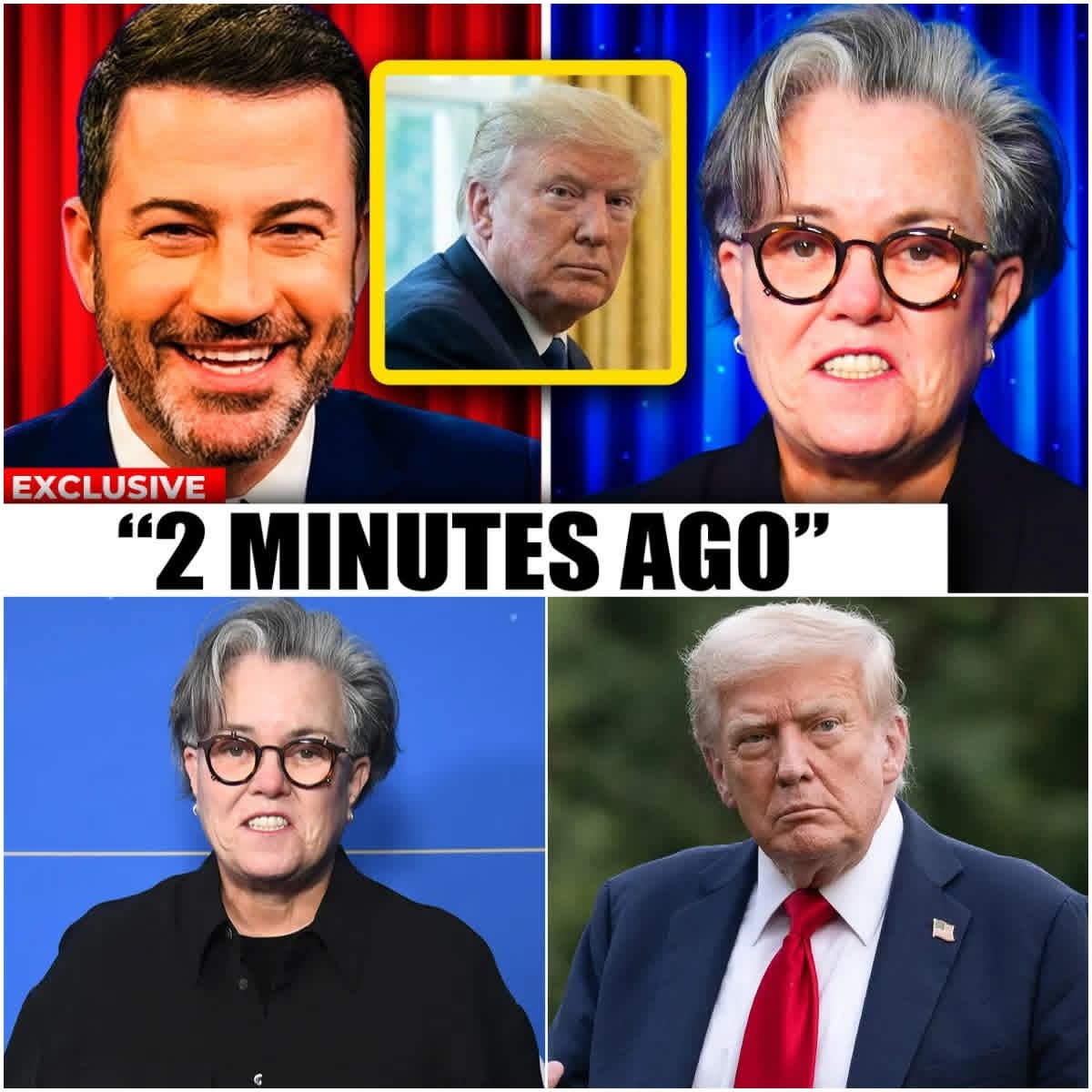
🔥 BREAKING: TRUMP REACTS AFTER JIMMY KIMMEL & ROSIE O’DONNELL REFRAME THE STORY ON LIVE TV ⚡
What unfolded across two separate live television moments wasn’t a shouting match or a headline-grabbing confrontation. Instead, it was something subtler and, to many viewers, more striking.
During a segment on Jimmy Kimmel Live!, host Jimmy Kimmel revisited a series of past public statements made by Donald Trump. The approach was measured. There were no raised voices, no new allegations, and no dramatic reveal. Instead, Kimmel presented clips and quotes side by side, aligning timing and context without overt commentary.
The format allowed viewers to hear the words again — this time in a sequence that emphasized contrast. Media observers noted that the power of the segment didn’t come from accusation but from arrangement. Familiar statements, when placed next to one another, created their own narrative.
A Separate Moment, A Similar Effect
Elsewhere, Rosie O’Donnell offered her perspective during a live television appearance of her own. O’Donnell, who has had a long and very public history of exchanges with Trump, focused her remarks on tone and pattern rather than introducing new claims.
She framed her comments as reflection rather than rebuttal — revisiting moments already well documented in the public record. Analysts later pointed out that her commentary mirrored Kimmel’s strategy: neither escalation nor investigation, but interpretation.
Why It Resonated
According to media analysts, the impact of the twin moments came from consistency. Neither personality attempted to “win” an argument. Neither tried to litigate facts. Instead, both reframed existing material through pacing and perspective.
That restraint may have amplified the reaction.
As clips circulated rapidly across social media platforms, viewers began drawing their own conclusions. Online discussions focused less on what was said — since much of it had been heard before — and more on how it was presented.
Trump’s Reaction
Attention soon shifted to Trump’s response. Commentators described visible frustration in subsequent remarks and posts, suggesting that the reaction stemmed not from new criticism but from the cumulative framing.
For some observers, it underscored a broader media dynamic: repetition alone doesn’t always shift perception — but recontextualization sometimes can.
A Familiar Debate, Reopened
Within hours, debate intensified online. Supporters argued the segments reflected selective editing. Critics countered that presenting direct quotes requires no embellishment. Neutral observers noted the evolving role of late-night television and commentary programming in shaping public discourse.
What made this moment stand out wasn’t confrontation it was contrast.
And as the clips continue to circulate, audiences are once again weighing how framing, repetition, and timing influence the way familiar narratives are understood.

🚨 “This Won’t Be Another Iraq War” — U.S. Issues Strong Warning to Iran Tensions are rising rapidly in the Middle East after a powerful statement from Mike Waltz. Speaking on Fox News, Waltz said the United States has “all kinds of options” on the table when it comes to confronting Iran’s nuclear ambitions — but made one thing clear: “This isn’t going to be another 2003 Iraq.” According to Waltz, stopping Iran from developing nuclear weapons has been a key promise made by former President Donald Trump throughout his campaigns, and a commitment the administration says it intends to keep. With tensions escalating and the world watching closely, many are asking the same question: What happens next? 👇 Do you think the U.S. should take stronger action against Iran?

Jill Biden is breaking her silence about former President Joe Biden’s decision to abruptly end his 2024 presidential reelection bid. Her new book, “View from the East Wing: A Memoir,” is scheduled to be published on June 2. A political spouse for nearly 50 years, Dr. Biden said she has never publicly discussed her feelings about the three-week stretch when her husband ended his political career, instead saving her thoughts for the pages of her soon-to-be-released memoir. Read more:

THE MONARCHY IS SHAKING! 😱 William and Catherine have just committed the ultimate royal ‘crime’—and the world is screaming for more! Forget the crown; they stepped out looking like star-crossed lovers in a total, obsessed trance! 🥺 Clinging to each other with a raw, electric intensity that defies every palace law… 20 years later and their passion is officially out of control! 🔥 But the real shocker? When the heavy doors closed, the room erupted in frantic whispers and camera madness! 👀 What forbidden act were they secretly doing away from the cameras? View the heart-stopping, unscripted footage before it’s banned: 👇👀 👉 SEE THE ROMANTIC EXPLOSION HERE:

MONARCH’S MESSAGE: King Charles is set to speak Monday about the “increasing pressures of conflict” around the world after President Trump voiced his frustration with Prime Minister Keir Starmer over the UK’s refusal to fully commit to the U.S.-Israeli military operation against Iran. Details below 👇👇👇

As the Iranians get closer to naming their next supreme leader, President Trump said Sunday the new leader “is not going to last long” if the Iranians don’t get his approval first. “He’s going to have to get approval from us,” the president told ABC News. “If he doesn’t get approval from us he’s not going to last long. We want to make sure that we don’t have to go back every 10 years, when you don’t have a president like me that’s not going to do it.” He added, “I don’t want people to have to go back in five years and have to do the same thing again or worse let them have a nuclear weapon.” Read more

🚨 “NO ONE’S TAKING MY TITLE!” Meghan Markle Reportedly Lawyers Up for an Unprecedented Showdown With Prince William Stripped of royal duties and increasingly distanced from the Palace but the title? Meghan reportedly insists that’s untouchable. As Prince William is said to be pushing for major changes within the monarchy, insiders claim Meghan is prepared to fight back legally to protect the one royal status she still holds. What once looked like a quiet royal rift is now being described as something far bigger. Full Details Below👇

REPORT: China President Xi Jinping Send Condolences to Iran, Pledge to Deploy 5,000 Troops to Iran Alongside 200 Advanced Missiles, Drones, Multiple Air Defense Systems, and Anti‑Ship Weapons, Escalating Tensions After U.S. and Israel Strike Led by Donald Trump and Benjamin Netanyahu

It Started With a Routine Traffic Stop… Hours Later, 128 Judges Were Under Arrest What police discovered during that stop allegedly uncovered a seven-year corruption network tied to powerful cartel operations inside the courts. 👉 See how one simple stop exposed everything full story below.

Tensions just crossed another line. According to Al Jazeera, air defenses linked to NATO intercepted and destroyed a missile launched from Iran as it traveled over the Mediterranean Sea toward Türkiye. No reported casualties. No confirmed damage. But the message is loud. This marks the first time in the current escalation that a NATO member’s airspace was directly threatened. Ankara says it reserves the right to respond, while allies including Belgium have voiced support. Officials in the United States are reportedly downplaying the likelihood of Article 5 being triggered. Here’s the real question: Was this a warning shot, a miscalculation, or something bigger? The region is already on edge. When missiles start flying toward alliance territory, the stakes change fast. What do you think happens next?

The Secret Behind the Hairpin: King Charles’s Gift to Charlotte ❤️ Amidst a solemn and dignified ceremony, a 10-year-old girl reminded the world that they are family first, and the monarchy is secondary. Princess Charlotte’s natural, instinctive bow was so graceful that it completely melted away King Charles’s stern expression. Seeing the future of the monarchy in his granddaughter’s eyes, the king was completely overcome with emotion. Witness this unscripted bonding moment, which is moving millions to tears today. ❤️✨ 👉See Now

The UK is sending its HMS Dragon warship to the eastern Mediterranean after attacks on a British base in Cyprus – but it is now expected to set off next week. Find out why…..👇
