
CELEBRITY
Critics Intensify Fire on Trump, Labeling Him a National Security Threat as Rhetoric Explodes Attacks on Donald Trump are escalating sharply, with critics warning he poses a serious risk to U.S. national security and using increasingly heated language as scrutiny of his actions grows. The backlash highlights a nation still deeply divided—supporters praising his hardline leadership, opponents arguing it has damaged democratic norms, alliances, and stability at home and abroad. Full story in comments 👇

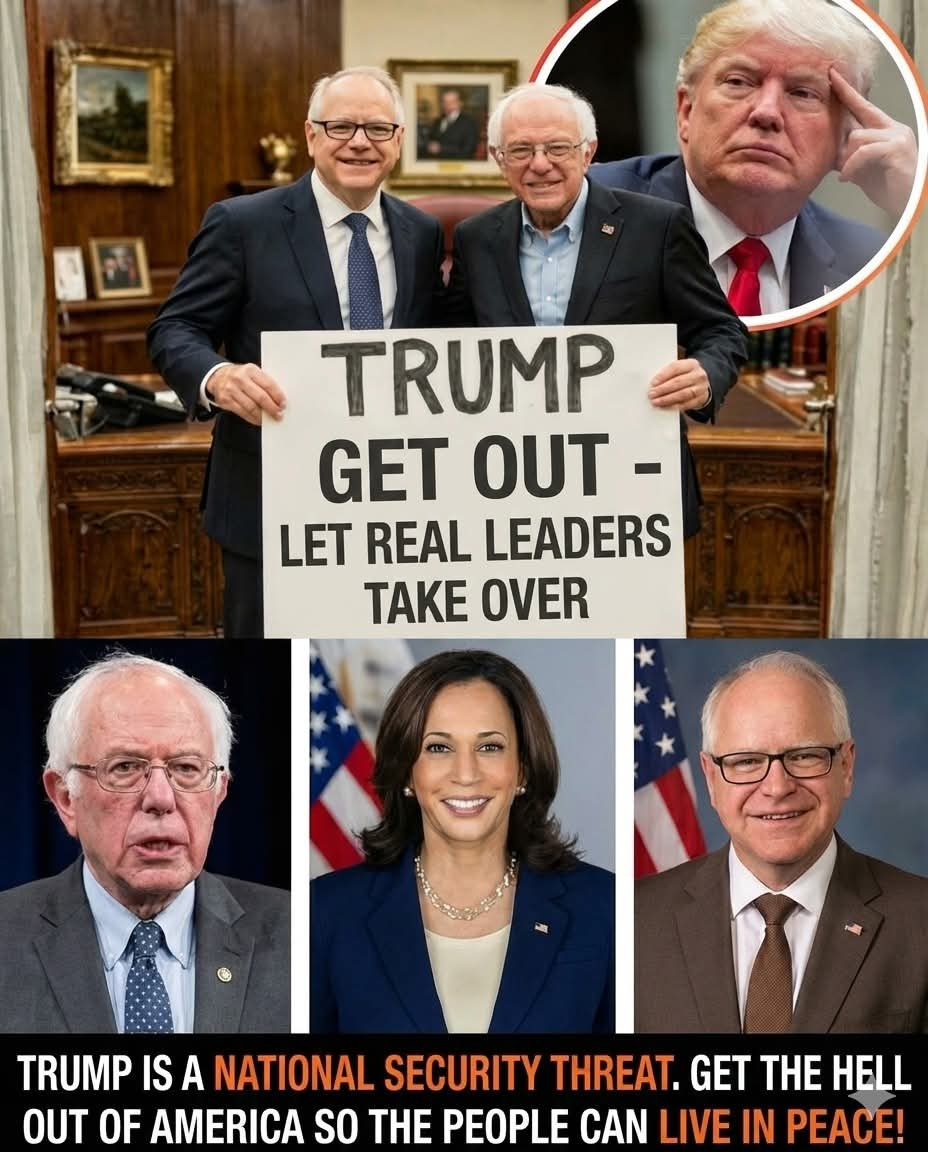
Critics Intensify Fire on Trump, Labeling Him a National Security Threat as Rhetoric Explodes
The political temperature in the United States is rising sharply once again as criticism of Donald Trump reaches a new crescendo. From cable news panels to congressional statements and foreign policy forums, opponents are sharpening their language some now openly warning that Trump represents a serious national security risk. The escalating rhetoric reflects not only renewed scrutiny of his words and actions, but also a nation still profoundly divided over what his leadership means for America’s future.
At the center of the backlash is a growing chorus of critics who argue that Trump’s approach to power marked by confrontational rhetoric, distrust of institutions, and an unconventional view of alliances undermines democratic norms at home while weakening U.S. credibility abroad. They point to his repeated attacks on intelligence agencies, judges, and the press, as well as his past willingness to question long-standing security partnerships, as evidence of what they describe as a destabilizing leadership style.
“National security is not just about tanks and treaties,” one former national security official said in a recent televised interview. “It’s about trust in institutions, in allies, and in the rule of law. When those are eroded, the country becomes more vulnerable.” Such warnings have grown louder as Trump continues to dominate headlines and shape the political conversation, even outside the Oval Office.
Democratic lawmakers and some Republican critics have echoed these concerns, arguing that Trump’s rhetoric especially around elections, political opponents, and global rivals creates openings for foreign adversaries to exploit internal divisions. Intelligence experts have long warned that polarization itself can be weaponized, and critics say Trump’s language often deepens those fractures rather than healing them.
Yet the backlash has only energized Trump’s base, who see the accusations as exaggerated, politically motivated attacks. Supporters argue that his hardline stance is precisely what makes him effective on national security. They credit his confrontational approach with pressuring allies to increase defense spending, deterring adversaries through unpredictability, and prioritizing American interests over global consensus.
To them, the latest wave of criticism is less about security and more about control. “They’re afraid because he doesn’t play by their rules,” one supporter said at a recent rally. “He challenges the system, and the system is fighting back.”
This clash of narratives underscores the deeper struggle defining American politics today. To Trump’s critics, he represents a break from democratic tradition that carries dangerous consequences. To his supporters, he is a disruptive force willing to confront entrenched interests and global rivals without apology. The same actions are interpreted in radically different ways, depending on which side of the divide one stands.
Internationally, the debate is being watched closely. Allies accustomed to predictable U.S. leadership have expressed unease in the past about sudden policy shifts and combative diplomacy, while adversaries have sometimes welcomed the chaos as an opportunity. Analysts note that perception matters in global security and the image of a deeply polarized America can weaken its influence regardless of who holds power.
As the rhetoric intensifies, so too does the risk of political discourse crossing into dangerous territory. Some observers warn that labeling any political figure an existential threat, while emotionally powerful, can further inflame tensions and make compromise nearly impossible. Others argue that failing to sound the alarm would be far more reckless.
What is clear is that Donald Trump remains a central, polarizing force in American life. The arguments swirling around him about security, democracy, and leadership are no longer confined to policy debates. They strike at fundamental questions about what the United States stands for, how it governs itself, and how it presents itself to the world.
With passions running high and language growing more severe, the battle over Trump’s legacy and future role shows no sign of cooling. Instead, it appears to be entering an even more volatile phase one that may define the nation’s political and security landscape for years to come.

THE SPY SHEIKH AND THE STOLEN SECRETS HOW A HALF BILLION DOLLAR CRYPTO DEAL SOLD OUT AMERICA In a revelation that has sent shockwaves through the intelligence community, a secret agreement signed just four days before the 2025 inauguration has linked the Trump family’s private wealth to the highest levels of foreign espionage. While the world watched the transition of power, a staggering $500 million was funneled into a fledgling cryptocurrency venture owned by the First Family, backed by a man known in the shadows as the Spy Sheikh. This wasn’t just a business investment; it was the key that unlocked access to America’s most guarded artificial intelligence technology. As billions in chips move across the ocean, the line between national policy and personal profit has completely vanished. Find the full story in the comments.

🤫 Royal Bombshell: 60 Minutes That Just Rewrote Prince Louis’s Destiny! 🚨 Just one hour ago, a decision from King Charles III sent shockwaves through the Palace walls, leaving royal experts utterly speechless! 🤯 After years of quiet concern from William and Catherine, the 77-year-old monarch has finally, decisively, intervened in Prince Louis’s future. What did the King secretly sign that has everyone buzzing? 🤔 This isn’t just a change in status; it’s a historic decree that could fundamentally reshape the very foundations of the British Monarchy! Get ready, because the Royal Family as we know it will never be the same again! 🌍📜 Don’t miss the full, exclusive details! Discover the unprecedented decision

PAM BONDI JUST DELIVERED A FULL-THROATED DEFENSE OF DONALD TRUMP. She said there is no evidence he committed a crime. She went further, calling this the most transparent presidency. The statement immediately reignited debate across social media. Supporters argue it shuts down months of speculation. Critics say the claim deserves deeper scrutiny. The timing of her remarks is what’s drawing the most attention. They came as legal and political pressure continues to build. Allies quickly amplified her words online. What led up to this declaration is now driving a much larger national conversation. 👇

A PETITION CALLING FOR MELANIA TRUMP’S DEPORTATION JUST STARTED GAINING SERIOUS MOMENTUM. What began as a small online push quickly escalated. The language used in the petition is fueling strong reactions on both sides. Supporters argue it highlights a broader political debate. Opponents say it crosses a line. The speed at which signatures accumulated surprised many observers. Social media amplified it within hours. Political commentators are now weighing in. The origins of the petition are drawing as much attention as its demand. The full sequence of how this moved from fringe idea to national headline is now unfolding. 👇

🔥 BREAKING: THE FORMER PRESIDENT QUESTIONS KELLY RIPA ON LIVE TV — HER RESPONSE STOPS THE CONVERSATION COLD ⚡ It was a high-energy daytime segment when the discussion suddenly shifted into unexpected territory. During a televised exchange, Donald Trump raised pointed questions about comments made by Kelly Ripa, turning what began as routine media chatter into a moment that quickly drew national attention.

Trump: “Say Whatever You Want — I Can’t Be Impeached, I’ll Run Again, and I’ll Win”

❤️🤍 HE WROTE HER A PROMISE YEARS AGO LAST NIGHT, TRUMP SANG IT BACK TO THEM ON VALENTINE’S DAY. It didn’t feel like a performance. It felt like a moment that belonged to the family… somehow spilling into the world. Read full:

🚨 BREAKING: Travis Kelce and Taylor Swift just took Valentine’s Day to a whole new level! 😱 Amidst swirling wedding rumors, the power couple was spotted in a special celebration that has the entire world in a frenzy! From secret gifts to intimate moments, the details are finally emerging. 🌹💍 Is the big day closer than we think? Get the exclusive scoop on their romantic night in the comments below! 👇

🔥 HOT NEWS: Melania Trump’s Multimillion-Dollar Documentary Faces a Pivotal Test as Its Next Phase Unfolds This Week The buzz has been loud, the expectations even louder and now the moment of truth has arrived. Melania Trump’s multimillion-dollar documentary is facing a pivotal test as its next phase unfolds this week, with insiders watching closely to see whether early intrigue turns into lasting momentum. Backed by significant investment and months of quiet buildup, the project has already defied easy labels, drawing curiosity from supporters and skeptics alike. What happens next could determine whether it breaks through as a cultural statement or stalls under the weight of its own ambition. Early reactions hint at promise, but timing, audience response, and execution are about to collide in a way that leaves little room for error. As the rollout accelerates and attention sharpens, this week may decide how the documentary is remembered and whether Melania’s story truly lands. 🎬 Next part of the story is posted in comments 👇

B.O.O.M! Prince William Just Set the Internet on Fire — and Washington Is Shaking! In a stunning, no-filters interview, Prince William, heir to the British throne, didn’t mince words — bluntly describing Donald Trump as “a self-serving showman” and issuing a stark warning that rippled far beyond the UK: “Wake up before it’s too late.” With rare, straight-from-the-heart candor, the Prince went directly to the point: “He is precisely why constitutional safeguards, restraint, and accountability exist.” Within minutes, the internet exploded. Supporters applauded the clarity. Critics were left stunned. And Washington descended into turmoil as Prince William’s remarks dominated headlines, social feeds, and political roundtables on both sides of the Atlantic. Prince William made one thing unmistakably clear: “We do not need kings. We need leaders who respect truth and serve the people — not themselves.” Love him or hate him, Prince William just voiced what millions have been thinking — and he didn’t blink. Want to stay up to date with the fallout from Prince William’s stunning comments? Click here for the latest developments and expert analysis:

Washington, D.C. —U.S. President Donald J. Trump Breaks Down in Tears as His 19-Year-Old Son Is Confirmed…
